Kitchen Drawer Slide Bracket: Installation & Selection
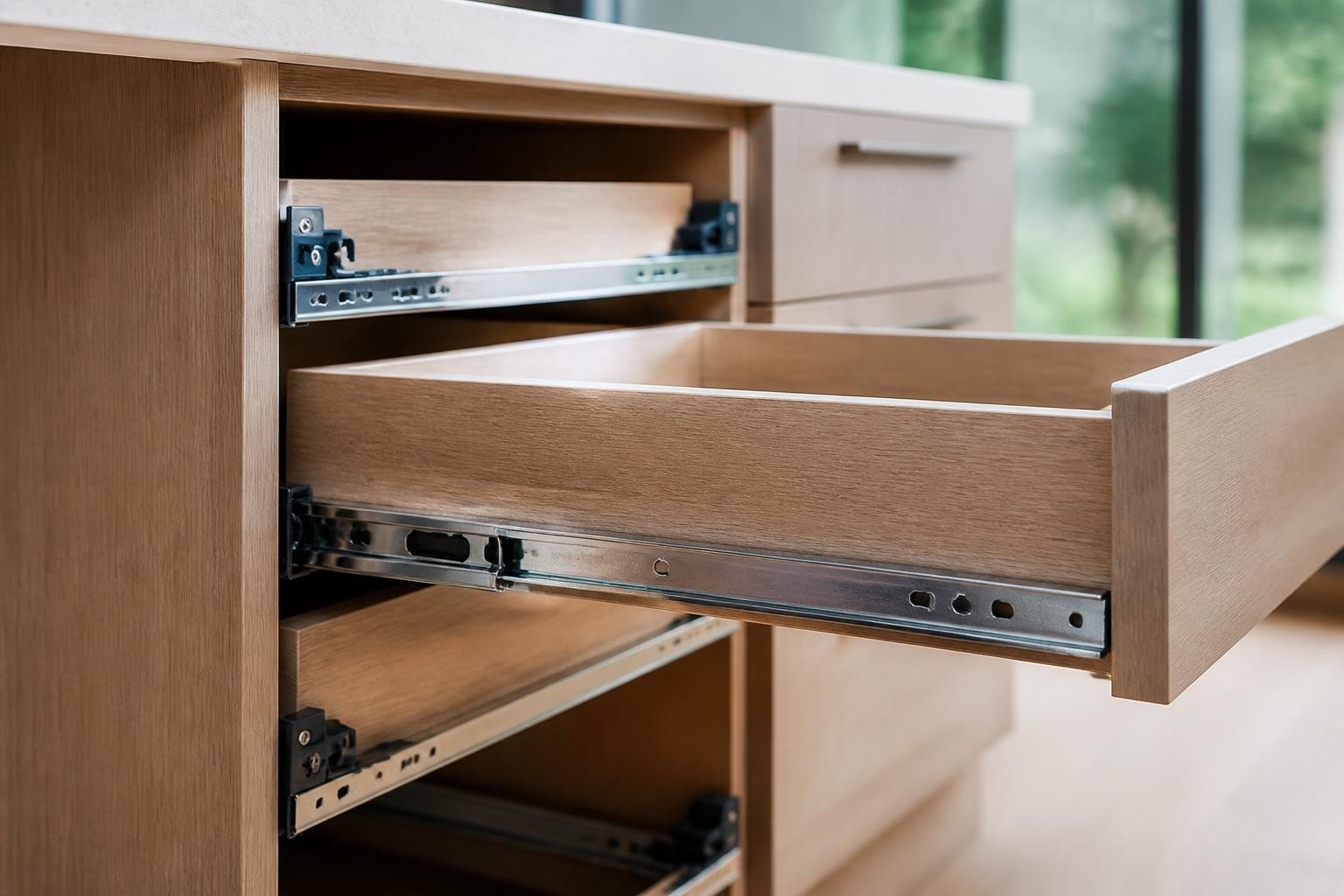
The kitchen drawer slide bracket is a critical component that many homeowners and even some installers overlook until a drawer begins to sag, bind, or fail entirely. This small but essential piece of hardware acts as the structural interface between your cabinet box and the sliding mechanism, transferring load from the drawer to the cabinet frame while maintaining precise alignment. Whether you're a DIY enthusiast upgrading your kitchen in Stellenbosch or a professional cabinet maker serving clients across the Western Cape, understanding how these brackets function, which types suit different applications, and how to install them correctly will elevate the quality and longevity of every drawer system you touch.
Understanding the Role of Drawer Slide Brackets
A kitchen drawer slide bracket serves multiple functions within a drawer system. At its most basic level, the bracket provides a mounting point that compensates for dimensional variations in cabinet construction. Face-frame cabinets, common in traditional American and South African kitchen designs, require brackets to bridge the gap between the frame rail and the interior sidewall where the slide must attach. Frameless European-style cabinets sometimes use brackets to adjust setback or to reinforce the mounting surface.
Beyond simple mounting, these brackets distribute load forces across a larger area of the cabinet structure. When you load a drawer with heavy cookware or pantry staples, the forces generated during opening and closing cycles concentrate at the attachment points. A properly specified bracket spreads these forces to prevent localized failure, splitting, or screw pull-out over years of use.
Bracket Types and Their Applications
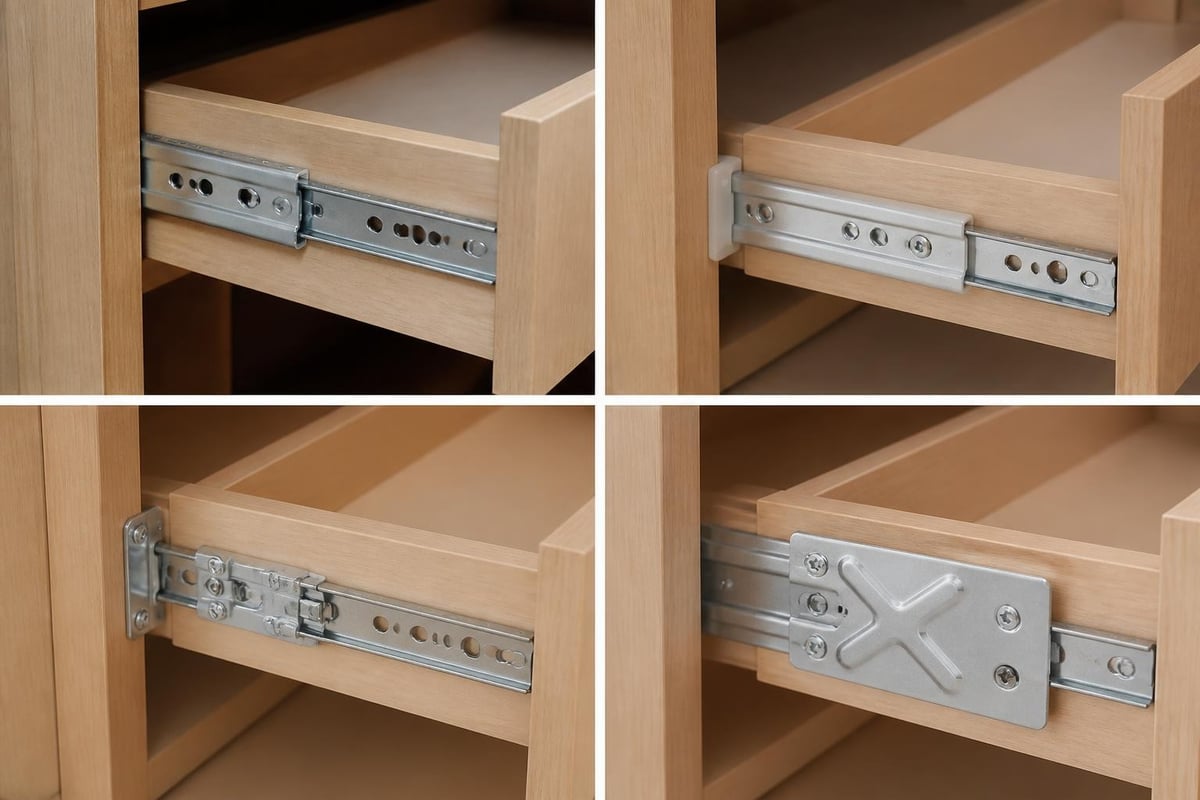
The market offers several distinct bracket designs, each optimized for specific slide types and cabinet configurations:
- Rear mounting brackets attach to the back wall of the cabinet and support the rear end of side-mount slides
- Front spacer brackets position the slide forward from the face frame, compensating for overlay door thickness
- Universal adjustment brackets provide multi-axis positioning for precise alignment during installation
- Heavy-duty reinforcement brackets increase load capacity for deep drawers or specialized storage applications
Side-mount slides typically require rear brackets or sockets that attach to the cabinet back panel. The Hettich Quadro technical documentation specifies exact setback dimensions and bracket placement for their face-frame applications, illustrating how bracket position directly affects drawer front gap and overall function. Undermount slides often integrate bracket features into the slide body itself, but may still require separate rear attachment hardware depending on cabinet construction.
Load Capacity and Structural Requirements
Professional cabinet work demands attention to load ratings and structural integrity. The AWI structural load capacity standards establish clear benchmarks for drawer systems, typically requiring general-use drawers to support 75 to 100 pounds without binding or failure. Your kitchen drawer slide bracket selection must align with these requirements to ensure long-term performance.
Material composition plays a central role in bracket capability. Steel brackets offer superior strength and durability, particularly for high-use kitchen environments where drawers open and close dozens of times daily. Zinc-plated steel resists corrosion in humid coastal areas around Gordon's Bay and Strand, while powder-coated options provide additional environmental protection. Plastic brackets exist in the market but generally suit only light-duty applications with minimal load requirements.
Matching Brackets to Slide Specifications
Manufacturers engineer slide systems with specific bracket requirements. Mixing incompatible components compromises both function and warranty coverage. When selecting hardware, verify:
| Specification | Why It Matters | Common Values |
|---|---|---|
| Slide length | Determines bracket placement and cabinet depth | 300mm - 600mm |
| Extension type | Affects rear bracket requirement | ¾ extension, full extension |
| Load rating | Dictates bracket material and gauge | 35kg, 45kg, 68kg |
| Mounting style | Defines bracket configuration | Side-mount, undermount |
| Cabinet type | Influences front bracket need | Face-frame, frameless |
The relationship between slide length and cabinet depth requires careful calculation. Standard practice allows 25-50mm of clearance behind the drawer box for the slide mechanism and rear bracket assembly. Installation guides for undermount systems detail how bracket positioning affects this critical dimension, particularly in face-frame cabinetry where the frame itself consumes interior space.
Installation Precision and Alignment
Proper installation of a kitchen drawer slide bracket demands methodical measurement and attention to tolerance. Even minor misalignment compounds across the drawer's travel distance, resulting in binding, uneven gaps, or premature wear. Professional installers working on projects throughout the Helderberg region understand that investment in accurate bracket placement pays dividends in customer satisfaction and reduced callback visits.
Begin by establishing reference lines on both cabinet sidewalls. These lines indicate the exact vertical position for each bracket and slide assembly. Use a quality level to ensure lines remain consistent across both sides, accounting for any irregularities in cabinet construction. The drawer slide installation guide from Lowe's recommends maintaining ½-inch clearance per side for side-mount applications, a tolerance that your bracket placement must respect.
Step-by-Step Bracket Installation
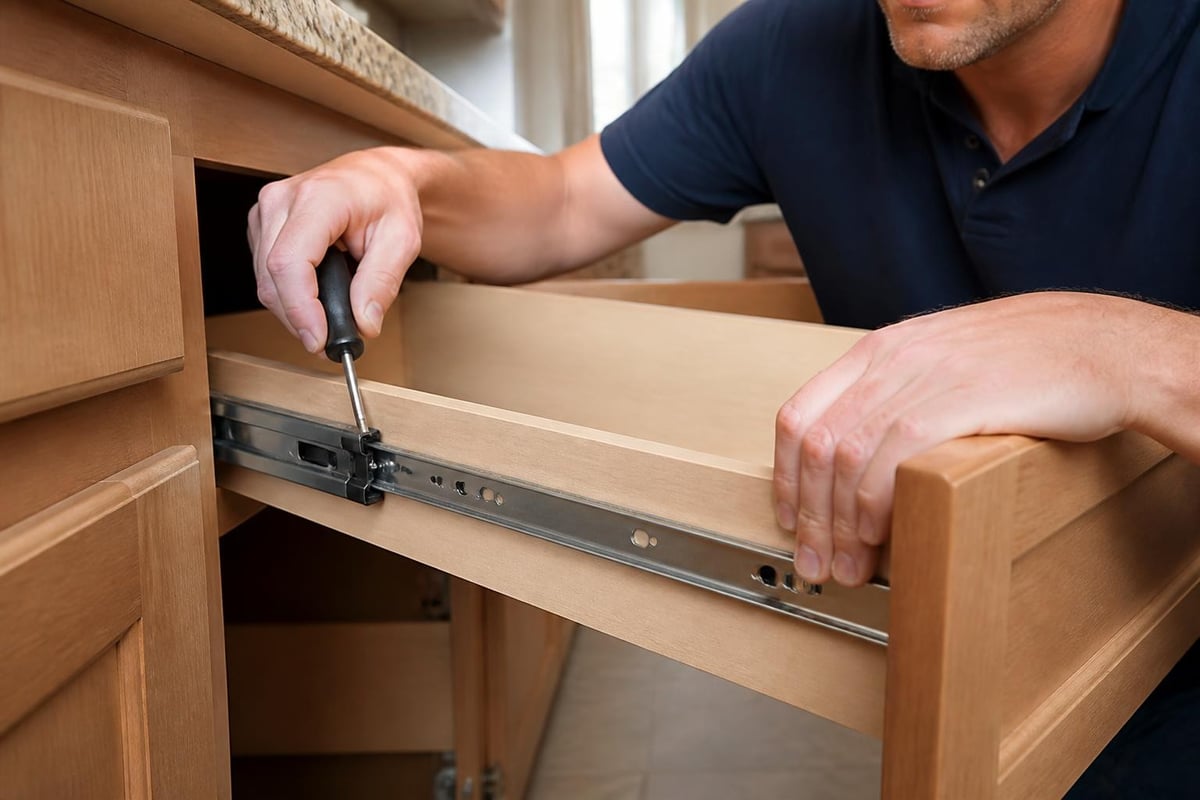
- Measure and mark the vertical centerline for each drawer opening, accounting for desired spacing between drawers
- Position the rear bracket according to manufacturer specifications, typically 25-32mm from the cabinet back edge
- Attach the front bracket or spacer to the face frame, ensuring it aligns with the cabinet interior sidewall
- Mount the slide to both brackets, checking for level along the slide's entire length
- Test fit the drawer box, making micro-adjustments to eliminate binding or excessive play
- Secure all fasteners to specified torque, avoiding over-tightening that can strip threads or crack mounting surfaces

Modern precision demands tolerances within ±1⁄16 inch for smooth operation, as noted in the 2026 installation guide from Trussell Transforms. This level of accuracy requires quality measuring tools and careful attention during the bracket attachment process. Many professional installers use dedicated jigs to maintain consistency across multiple drawer installations, an approach that becomes essential for larger kitchen projects.
For those working with professional installation techniques, understanding the relationship between bracket placement and overall cabinet functionality proves essential for delivering quality results.
Material Selection and Durability Considerations
The longevity of your drawer system depends heavily on bracket material quality and corrosion resistance. Kitchen environments expose hardware to temperature fluctuations, humidity, cleaning chemicals, and mechanical stress. A kitchen drawer slide bracket fabricated from inferior materials will corrode, deform, or fail long before the cabinet structure itself requires replacement.
Steel gauge indicates material thickness and strength. Heavy-duty applications demand brackets manufactured from 14-gauge or thicker steel, while standard residential use typically succeeds with 16 to 18-gauge material. The gauge number inversely relates to thickness; lower numbers indicate thicker, stronger steel. For coastal installations where salt air accelerates corrosion, specify brackets with robust protective coatings or consider stainless steel options despite their higher cost.
Coating Technologies and Protection
| Coating Type | Corrosion Resistance | Cost Factor | Best Application |
|---|---|---|---|
| Zinc plating | Good | Low | Standard residential kitchens |
| Powder coating | Very good | Moderate | High-humidity environments |
| Electroless nickel | Excellent | High | Coastal or chemical exposure |
| Stainless steel | Superior | Very high | Marine or commercial kitchens |
The AWI hardware quality standards address durability requirements for commercial and high-grade residential projects, establishing minimum performance criteria that quality brackets must meet. These standards provide a useful benchmark even for residential work, ensuring hardware performs reliably throughout the cabinet's service life.
Troubleshooting Common Bracket Issues
Even properly installed brackets can develop problems over time or reveal issues during initial setup. Recognition of common failure modes enables quick diagnosis and resolution, whether you're a homeowner in Somerset West addressing a sagging drawer or a cabinet maker conducting quality control before project handover.
Screw pull-out represents the most frequent bracket failure mode. This occurs when the fasteners lose their grip in the cabinet material, allowing the bracket to shift or detach under load. Contributing factors include:
- Oversized pilot holes that reduce thread engagement
- Insufficient material thickness at the mounting point
- Repeated stress cycles in high-use drawers
- Moisture damage to particleboard or MDF substrates
- Over-torquing during installation that strips the material
Address screw pull-out by relocating the bracket slightly to access virgin material, using larger-diameter fasteners with appropriate pilot holes, or reinforcing the area with a backing plate that distributes load across a larger surface area.
Alignment and Binding Problems
Drawer binding during operation typically traces back to bracket misalignment rather than slide defects. When the left and right slides don't run parallel to each other and perpendicular to the cabinet face, the drawer box experiences twisting forces that manifest as binding, particularly near full extension.
Systematic diagnosis requires checking multiple reference points:
- Verify vertical alignment between front and rear brackets on each side
- Confirm equal setback measurements for both left and right brackets
- Measure the diagonal distances across the drawer opening to identify skew
- Check that brackets sit flat against their mounting surfaces without gaps or bowing
The technical guide for bracket selection and installation provides detailed troubleshooting workflows that address these alignment issues, offering solutions for both face-frame and frameless cabinet configurations.
Bracket Specifications for Different Cabinet Styles
Face-frame and frameless cabinets demand different bracket approaches due to their fundamental structural differences. Understanding these distinctions enables you to specify appropriate hardware for any project, whether you're retrofitting existing cabinetry or designing new installations for clients across the Western Cape.
Face-frame construction places a solid wood frame across the front of the cabinet box, creating an offset between the interior sidewall and the front edge. This offset necessitates spacer brackets at the front mounting point, positioning the slide's drawer attachment point flush with the inside edge of the face frame. Rear brackets attach to the cabinet back panel or, in some designs, to the sidewall near the rear edge.
Frameless Cabinet Bracket Requirements
Frameless or European-style cabinets eliminate the face frame, presenting the box edges directly at the cabinet front. This construction simplifies bracket requirements in some ways while introducing different challenges:
- Direct sidewall mounting provides robust attachment without need for front spacers
- Precise boring patterns must position holes accurately relative to the front edge
- Adjustment range becomes more critical since face frame flexibility is absent
- Heavy-duty applications may require reinforced mounting areas in the sidewall
Many installers working with undermount drawer slide systems appreciate how these mechanisms integrate bracket functions directly into the slide body, reducing component count and simplifying installation in both cabinet styles.
Professional Standards and Quality Benchmarks
Professional cabinet work adheres to industry standards that specify minimum hardware quality and performance criteria. These standards protect end users while establishing a common language between manufacturers, installers, and project specifiers. When sourcing a kitchen drawer slide bracket for professional installations, reference to established standards ensures you meet or exceed client expectations and building code requirements where applicable.
The Architectural Woodwork Institute publishes comprehensive standards covering hardware selection, installation methods, and performance requirements. Their specifications categorize work into economy, custom, and premium grades, each with distinct hardware requirements. Premium grade work, typical of high-end residential and commercial projects, mandates drawer slides and brackets capable of supporting specified loads through extended duty cycles without degradation.
Quality hardware suppliers serving professionals understand these requirements and stock products that meet recognized standards. JM Cabinet Solutions provides access to trusted international brands that comply with professional benchmarks, supporting cabinet makers and installers who demand reliable components for their projects.
Retrofit and Replacement Considerations
Existing kitchens frequently require drawer hardware replacement due to wear, damage, or upgrade to modern soft-close functionality. Retrofit installations present unique challenges since you must work within the constraints of existing cabinet construction, hole patterns, and dimensional limitations. The kitchen drawer slide bracket becomes even more critical in these scenarios, often serving to adapt new slides to old mounting points.
Assess the existing cabinet condition before specifying replacement hardware. Check for:
- Structural damage in mounting areas that may require repair before new hardware installation
- Material degradation in particleboard or MDF that reduces fastener holding power
- Dimensional constraints that limit slide length or bracket configuration options
- Access limitations that affect your ability to install certain bracket styles
In many retrofit situations, universal adjustment brackets prove invaluable. These designs provide multi-dimensional positioning capability, compensating for irregularities in the original construction or allowing you to use modern slide systems in cabinets built to older standards.
Upgrading to Soft-Close Functionality
Modern drawer slides incorporate damping mechanisms that prevent slamming and extend hardware life. When upgrading from basic slides to soft-close models, verify that your bracket selection accommodates any dimensional differences. Soft-close mechanisms add length to the slide assembly, potentially requiring adjusted setback or deeper cabinet boxes. Some designs integrate the damper into the slide body, while others use separate modules that attach near the bracket mounting points.
Homeowners undertaking DIY upgrades benefit from understanding how bracket compatibility affects their hardware choices. Using appropriate installation tools and techniques ensures professional results even in retrofit applications where existing conditions present challenges.
Maintenance and Long-Term Performance
A properly installed kitchen drawer slide bracket should function for decades with minimal maintenance, but periodic inspection and minor adjustments preserve optimal performance. Professional installers educate clients about basic drawer care, preventing premature wear and reducing service callbacks.
Annual inspection should verify:
- Fastener tightness at all bracket mounting points, gently snugging any that have loosened
- Bracket condition checking for corrosion, deformation, or cracking
- Alignment maintenance ensuring drawers continue to operate smoothly without binding
- Load appropriateness confirming drawer contents remain within design limits
Clean brackets and slides periodically using a dry cloth to remove dust and debris. Avoid lubricants unless specifically recommended by the slide manufacturer, as many modern ball-bearing and roller systems operate best without additional lubrication. If you do apply lubricant, use only dry PTFE or silicone-based products that won't attract dust or migrate onto drawer contents.
Signs of Bracket Failure
Recognize early warning signs that indicate bracket problems requiring attention:
- Increased effort required to open or close drawers
- Uneven gaps between drawer front and face frame
- Sagging drawer front when extended
- Metallic scraping or grinding noises during operation
- Visible bracket deformation or fastener protrusion
Addressing these symptoms promptly prevents secondary damage to slides, drawer boxes, or cabinet structure. In many cases, simple bracket adjustment or fastener replacement resolves the issue without requiring complete hardware replacement.
Bracket Selection for Specialized Applications
Certain kitchen storage applications demand specialized bracket solutions that exceed standard residential requirements. Heavy pot drawers, appliance garages, and pantry pullouts subject hardware to higher loads and more frequent cycling than typical utensil or dish storage. When designing these features, specify brackets and slides engineered for the actual use case rather than assuming standard hardware will suffice.
Heavy-duty drawer systems rated for 100 pounds or more require robust bracket designs, often fabricated from thicker steel with additional reinforcement ribs. Attachment points may specify larger or more numerous fasteners to distribute forces adequately. Some applications benefit from brackets that incorporate leveling adjustment separate from the slide mechanism, simplifying installation and future service.
The correlation between bracket quality and overall system performance becomes especially apparent in demanding applications. Attempting to economize on bracket specifications while investing in premium slides undermines the entire assembly, creating a weak link that limits practical load capacity and longevity.
Integration with Modern Cabinet Features
Contemporary kitchen design increasingly incorporates electronic components, organization systems, and specialized storage solutions that interact with drawer hardware. Your kitchen drawer slide bracket selection must account for these integrated features to ensure compatibility and maintain functionality across all cabinet elements.
Drawers with internal LED lighting require wire routing considerations that affect bracket placement and slide selection. Organization inserts add weight and may shift the center of gravity, influencing optimal slide position. Touch-latch mechanisms that eliminate external handles demand slides and brackets capable of withstanding the repeated impact forces generated by push-to-open operation.
When working on complex installations that combine multiple hardware types, coordination between components prevents conflicts. Review complete specifications to identify potential interference between brackets, hinges, internal fittings, and cabinet structure before beginning installation. This systematic approach, common among experienced professionals serving the cabinet industry, eliminates costly corrections and ensures first-time success.
Selecting and installing the right kitchen drawer slide bracket transforms drawer systems from basic storage into reliable, long-lasting kitchen features. Understanding bracket types, load requirements, installation precision, and material specifications enables you to make informed decisions whether you're tackling a DIY upgrade or managing a complete kitchen renovation. JM Cabinet Solutions stocks quality drawer slides, brackets, and cabinet hardware from trusted international brands, providing the components and expertise you need for professional results throughout Strand, Somerset West, and the broader Western Cape region.


Comments
Post a Comment