Cabinet Without Handles: Design Guide & Hardware Options
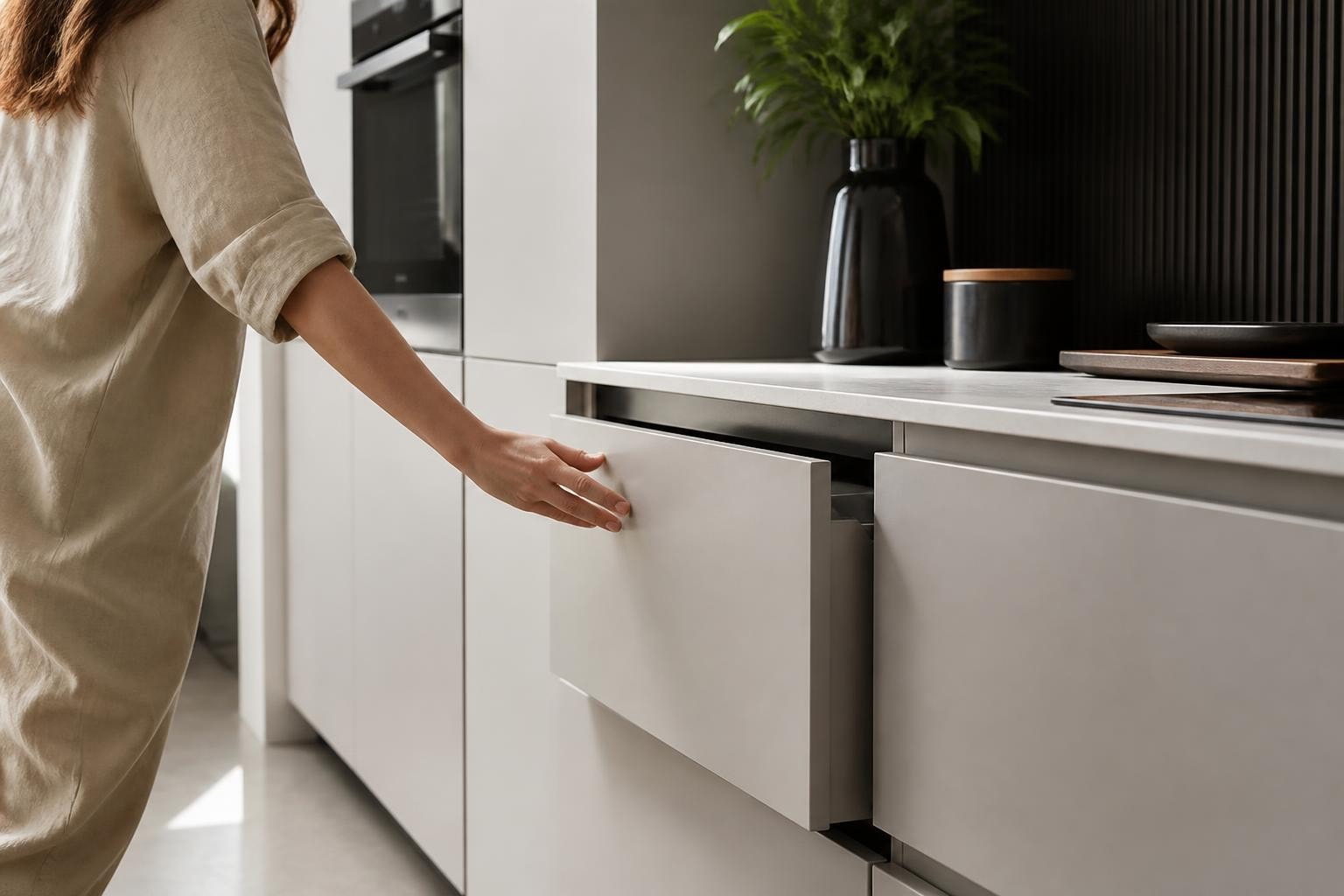
Modern kitchen and furniture design increasingly embraces minimalist aesthetics, and the cabinet without handles has emerged as a defining feature of contemporary interiors. This sleek design approach eliminates traditional hardware in favor of integrated opening mechanisms, creating clean lines and uncluttered surfaces. Whether you're a homeowner planning a renovation, a cabinet maker exploring new design options, or an installer seeking practical solutions, understanding the various systems and hardware requirements for handleless cabinets is essential for achieving both functionality and visual appeal in 2026.
Understanding the Appeal of Handleless Cabinet Design
The cabinet without handles represents more than just a passing trend. According to industry observations, handleless kitchen cabinets continue to dominate modern design trends due to their ability to create seamless, sophisticated spaces. This design philosophy aligns perfectly with the minimalist movement that has shaped interior design throughout the past decade.
Key Benefits of Handleless Systems
Choosing a cabinet without handles offers several practical and aesthetic advantages:
- Enhanced safety in busy kitchens and households with children, eliminating protruding hardware that can catch clothing or cause injury
- Easier cleaning with smooth, continuous surfaces that don't collect dust and grime around hardware
- Visual continuity that makes spaces appear larger and more cohesive
- Modern aesthetic that complements contemporary architectural styles
- Flexibility in material choices, from high-gloss finishes to natural wood veneers
The streamlined appearance of handleless cabinets also contributes to a sense of calm and order, particularly valuable in smaller spaces where visual clutter can feel overwhelming. Kitchen installers working in compact homes throughout Strand and Somerset West find that this design approach maximizes the perception of available space.
Primary Hardware Systems for Handleless Cabinets
Achieving a successful cabinet without handles installation requires selecting the appropriate opening mechanism. Each system offers distinct advantages and installation considerations that affect both functionality and cost.
Push-to-Open Mechanisms
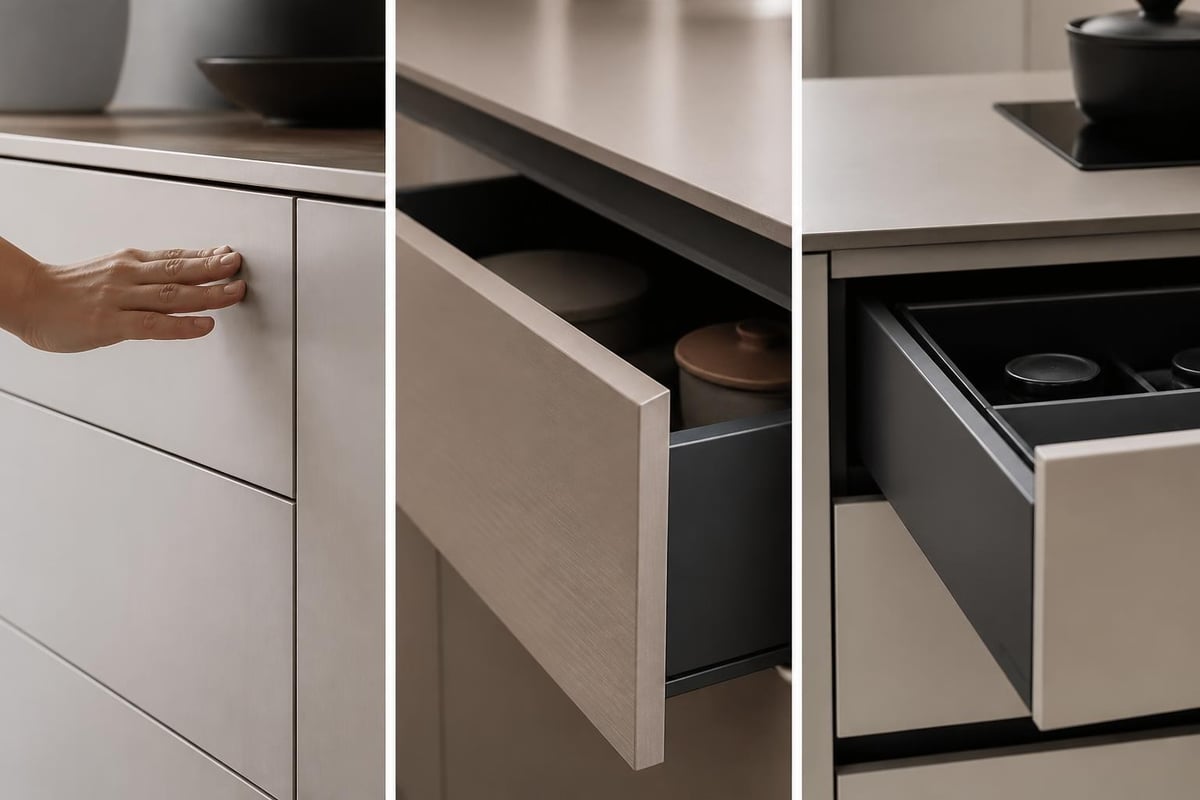
Push-to-open systems represent the most invisible solution for handleless cabinets. These spring-loaded mechanisms allow users to press gently on the door or drawer front, which then pops open slightly for gripping. Push-to-open mechanisms have become increasingly sophisticated, offering smooth operation and reliable performance over thousands of cycles.
Installation Requirements:
- Precise cabinet construction with doors hung perfectly square
- Magnetic or mechanical catch systems mounted inside the cabinet
- Soft-close dampers to prevent slamming
- Adequate clearance behind drawer fronts for mechanism housing
- Quality hinges capable of supporting the additional mechanism weight
| Mechanism Type | Best Application | Typical Cost Factor | Maintenance Need |
|---|---|---|---|
| Magnetic Push | Light doors | Low | Minimal |
| Mechanical Push | Heavy drawers | Medium | Low |
| Electronic Push | Premium installations | High | Moderate |
The success of push-to-open systems depends heavily on precise installation. Cabinet makers must ensure doors align perfectly, as even minor misalignment can prevent proper operation.
J-Pull and Integrated Rail Systems
J-pull profiles create a recessed grip along the top or bottom edge of cabinet doors, providing a subtle handling area that maintains the handleless aesthetic. These integrated profiles can be machined directly into thicker door panels or added as separate aluminum or wood components.
Horizontal rail systems offer another elegant solution, incorporating a continuous channel along banks of cabinets. These rails serve as both design elements and functional grips, particularly effective for tall cabinets and pantry units.
Advantages of Rail Systems:
- More intuitive operation than push mechanisms
- No mechanical components requiring maintenance
- Suitable for heavier doors and drawers
- Can accommodate contrasting materials for visual interest
- Reliable performance regardless of installation precision
Finger Pull Cutouts
Routed finger pulls provide a cost-effective approach to handleless design. These small recesses machined into the door edge or face allow users to hook their fingers for opening. While simpler than mechanical systems, finger pulls require careful planning regarding placement and depth to ensure comfortable operation.
Design Considerations for Handleless Cabinets
Creating an effective cabinet without handles requires attention to multiple design factors beyond just the opening mechanism. The overall success depends on careful material selection, finish choices, and spatial planning.
Material and Finish Selection
High-gloss and matte lacquered finishes showcase handleless designs particularly well, as they emphasize the clean, continuous surfaces. However, these finishes also show fingerprints more readily than traditional cabinet fronts with handles. Many homeowners in the Western Cape balance aesthetics with practicality by selecting:
- Textured laminates that resist fingerprint visibility
- Medium-gloss finishes offering easier maintenance than high-gloss
- Wood grain veneers providing natural variation that conceals marks
- Anti-fingerprint coatings available on premium materials
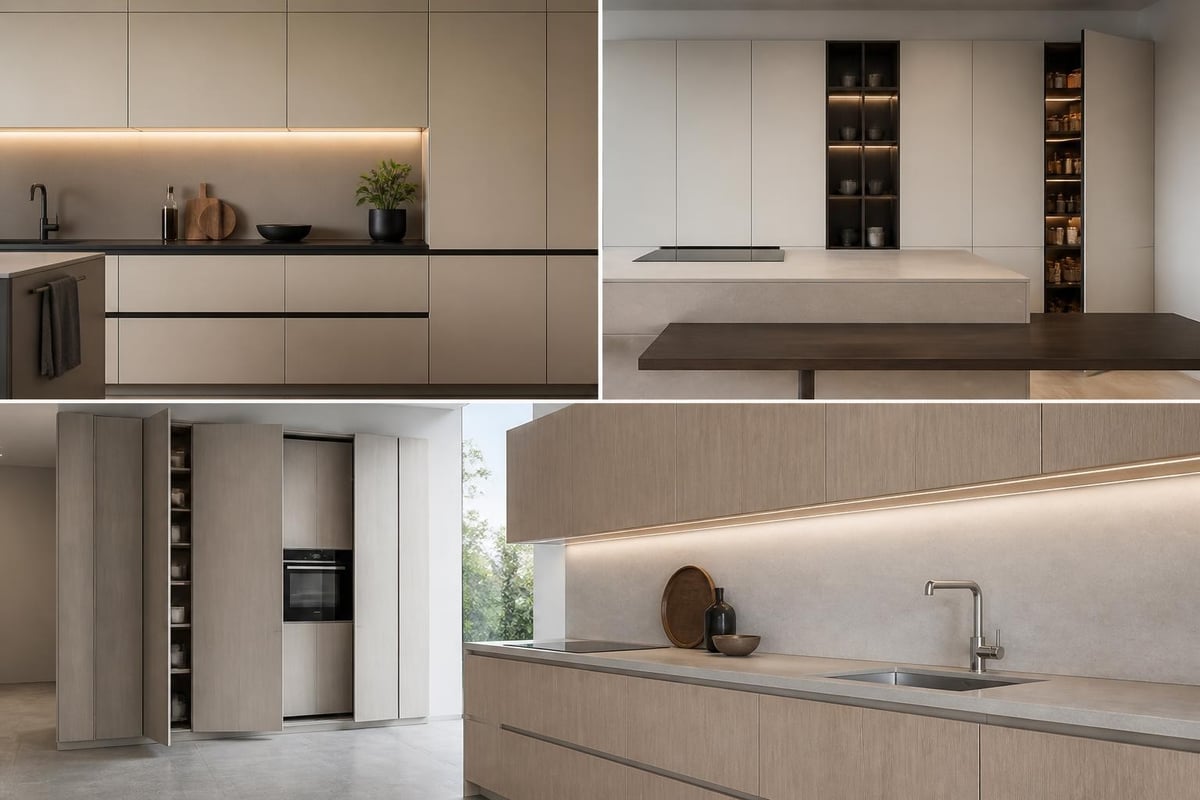
The choice between horizontal and vertical grain orientation also affects the visual impact. Vertical grain often elongates the appearance of cabinets, while horizontal grain can make spaces feel wider.
Ergonomic and Functional Planning
Successful handleless kitchen design requires thoughtful consideration of how users interact with storage. Professional designers recommend evaluating traffic patterns and usage frequency when selecting which cabinets receive which opening mechanisms.
Strategic Placement Guidelines:
- Frequently accessed cabinets benefit from push-to-open mechanisms
- Heavy drawers containing cookware work better with J-pull systems
- Upper cabinets can effectively use push systems due to lighter doors
- Base cabinets storing heavy items should incorporate rail systems
- Corner cabinets may require traditional handles for accessibility
Installers should also consider the physical requirements of household members. While push mechanisms appeal aesthetically, they may prove challenging for individuals with limited hand strength or dexterity issues.
Hardware Components and Quality Considerations
While the cabinet without handles appears simple externally, the internal hardware determines long-term performance and user satisfaction. Quality components make the difference between a system that operates smoothly for decades and one requiring frequent adjustment or replacement.
Essential Hardware Elements
Several critical components work together to enable handleless cabinet function:
Hinges: Soft-close hinges designed for handleless applications must support the weight of doors while accommodating push-to-open mechanisms. These specialized hinges often integrate damping technology to prevent slamming. Understanding quality kitchen hardware hinges is essential for proper handleless cabinet installation.
Drawer Runners: Handleless drawer systems demand premium drawer slides with integrated soft-close damping. The slides must operate smoothly under light pressure, as users cannot pull forcefully without handles. Full-extension runners prove particularly important, allowing complete access to drawer contents.
Push Latches: These spring-loaded mechanisms require regular quality testing. Premium manufacturers offer latches rated for 50,000 to 100,000 cycles, ensuring years of reliable operation in busy kitchens.
| Component | Budget Option | Mid-Range | Premium |
|---|---|---|---|
| Push Latch | 5-10 year lifespan | 10-15 year lifespan | 15-20+ year lifespan |
| Soft-Close Hinge | Basic damping | Adjustable damping | Integrated push-open |
| Drawer Runner | Standard soft-close | Full extension | Silent system |
For homeowners and professionals throughout Gordon's Bay and Stellenbosch seeking quality hardware components, JM Cabinet Solutions stocks trusted international brands specifically designed for handleless applications, providing both the mechanical components and expert guidance needed for successful installations.
Installation Best Practices and Common Challenges
Installing a cabinet without handles system requires greater precision than traditional cabinet installation. The tolerances for handleless systems prove significantly tighter, as any misalignment becomes immediately apparent and affects functionality.
Critical Installation Steps
Professional installers follow specific protocols to ensure optimal handleless cabinet performance:
- Verify cabinet box squareness using precision measuring tools
- Install all hardware components before mounting doors
- Adjust hinges meticulously to achieve consistent gaps
- Test push mechanisms under various pressure applications
- Fine-tune soft-close damping for smooth, silent operation
- Confirm alignment across banks of multiple cabinets
Using quality cabinet hardware installation jigs significantly improves accuracy and reduces installation time, particularly when working with multiple cabinets requiring identical hardware placement.
Troubleshooting Common Issues
Even experienced installers encounter challenges with handleless systems. Understanding common problems helps prevent callbacks and ensures customer satisfaction.
Doors Won't Stay Closed: This typically indicates insufficient magnetic catch strength or misaligned push latches. Verify that catches are mounted at the recommended distance from the door edge and that magnetic strength matches door weight.
Uneven Gaps Between Doors: Handleless designs make any gap inconsistencies highly visible. This requires careful hinge adjustment and may necessitate shimming cabinet boxes to achieve perfect alignment.
Drawers Push Open Too Forcefully: Overly aggressive push latches can cause drawers to extend too far. Adjust latch tension or replace with softer-action mechanisms appropriate for drawer weight.
Fingerprints and Smudging: While not a mechanical issue, visible fingerprints frustrate many homeowners. Recommend appropriate cleaning products and consider suggesting finish alternatives for particularly problematic areas.
Adapting Existing Cabinets to Handleless Design
Many homeowners and renovators wonder whether existing cabinetry can convert to a cabinet without handles configuration. While possible, this conversion requires careful assessment of current cabinet construction and condition.
Conversion Feasibility Assessment
Good Candidates for Conversion:
- Cabinets with European-style frameless construction
- Doors with sufficient thickness (18mm minimum) for J-pull routing
- Cabinets with quality existing hinges that can accommodate push mechanisms
- Drawer boxes equipped with modern soft-close runners
- Structures built square and level throughout
Poor Candidates for Conversion:
- Face-frame construction without overlay doors
- Warped or damaged door fronts requiring replacement
- Cabinets with settlement issues affecting alignment
- Very lightweight or hollow-core doors
- Outdated hardware systems incompatible with soft-close mechanisms
Conversion Process Overview
Converting traditional cabinets to handleless operation involves several steps:
Remove existing handles and fill mounting holes with color-matched filler. For cabinets receiving push latches, install magnetic or mechanical catches according to manufacturer specifications. Test door alignment and adjust hinges to eliminate any gaps or misalignment. Install soft-close dampers if not already present, as these prove essential for handleless operation.
Consider J-pull routing as an alternative to push mechanisms, particularly for drawers where mechanical latches may prove problematic. Professional woodworkers can route these profiles using specialized router bits, though this requires precise technique to achieve consistent depth and clean edges.
Style Integration and Design Trends
The cabinet without handles works within various design styles, though its effectiveness varies depending on overall aesthetic goals. Design experts note that handleless kitchens maintain their contemporary appeal while adapting to evolving color palettes and material preferences.
Contemporary and Modern Settings
Handleless design naturally complements contemporary interiors featuring clean lines, minimal ornamentation, and emphasis on form following function. These spaces often incorporate:
- Integrated appliances maintaining seamless facades
- Continuous countertops without visual interruption
- Consistent material palettes throughout cabinetry
- Strategic lighting highlighting surface continuity
- Open shelving balancing closed handleless storage
Transitional and Warm Minimalism
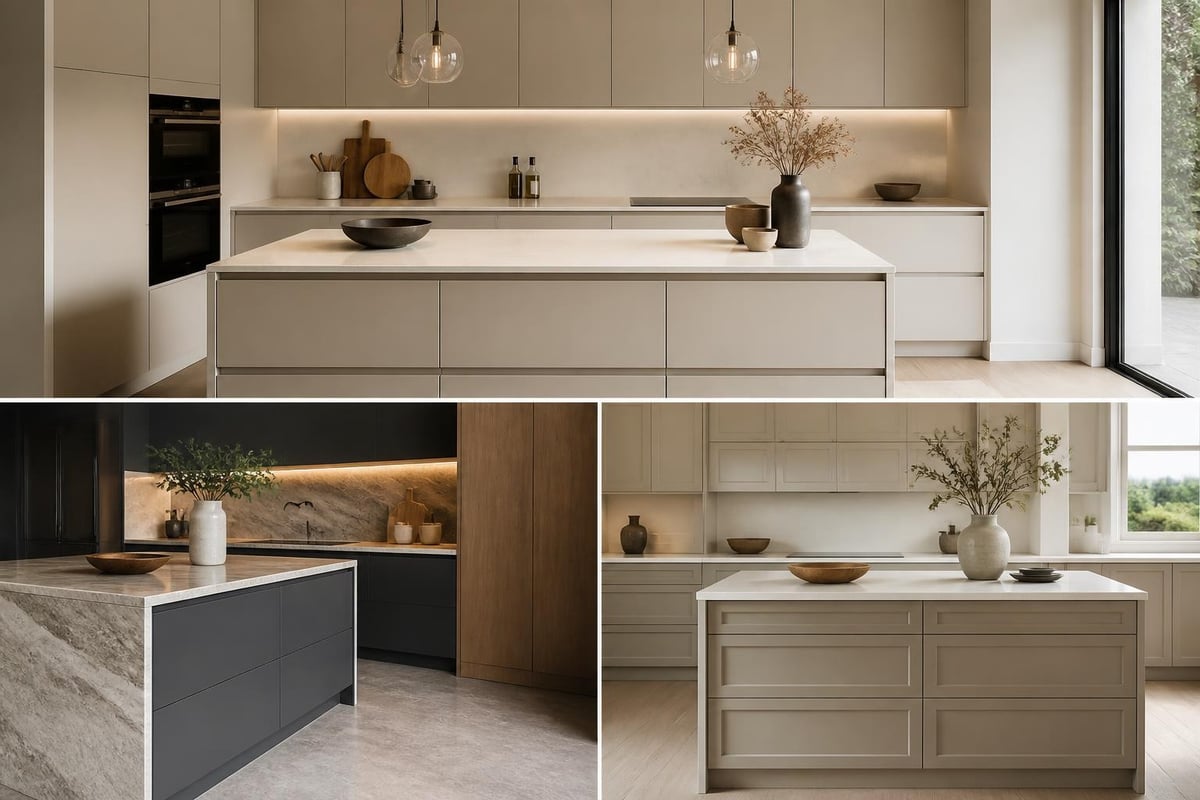
Recent design trends demonstrate that handleless cabinets successfully integrate into warmer, more transitional spaces when balanced with textural elements. Wood grain finishes, tactile materials, and natural stone combine with handleless cabinets to create approachable rather than austere environments.
This approach proves particularly popular among homeowners seeking modern functionality without sacrificing warmth and comfort. Pairing handleless lower cabinets with open upper shelving or glass-front cabinets creates visual variety while maintaining the streamlined aesthetic.
Traditional Settings with Modern Updates
While less common, some designers successfully incorporate handleless elements into traditional kitchens as part of modernization efforts. This typically involves using handleless systems for specific zones, such as appliance garages or pantry units, while maintaining traditional hardware on perimeter cabinets.
Maintenance and Long-Term Care
Maintaining a cabinet without handles requires different attention than traditional cabinetry. The absence of hardware means surfaces receive more direct contact, affecting both appearance and mechanism performance.
Cleaning and Surface Care
Daily Maintenance:
- Wipe surfaces with microfiber cloths to remove oils and fingerprints
- Use pH-neutral cleaners appropriate for cabinet finish
- Avoid abrasive materials that can scratch or dull surfaces
- Clean push-to-open contact points regularly to prevent buildup
- Address spills immediately to prevent finish damage
Quarterly Maintenance:
- Apply finish-appropriate polish or protective coating
- Test all push mechanisms for consistent operation
- Inspect soft-close dampers for proper function
- Check door and drawer alignment
- Tighten any loose mounting hardware
Hardware Adjustment and Replacement
Over time, even quality hardware requires adjustment. Push latches may weaken, requiring replacement to maintain proper function. Soft-close dampers eventually wear out, though premium systems can last 15-20 years with proper care.
Cabinet makers and installers should educate clients about expected maintenance intervals and provide contact information for future service needs. Establishing relationships with suppliers like professional cabinet hardware providers ensures access to replacement components matching original specifications.
Cost Considerations and Value Analysis
The cabinet without handles typically increases overall project costs compared to traditional handle installation. However, this investment delivers value through enhanced aesthetics, improved functionality, and modern appeal that can increase property value.
Budget Planning Guidelines
Hardware Cost Factors:
| Component Category | Traditional | Handleless Basic | Handleless Premium |
|---|---|---|---|
| Opening Mechanism | R50-150 per handle | R200-400 per push latch | R500-800 per electronic system |
| Hinges | R80-150 each | R200-350 each | R400-600 each |
| Drawer Runners | R300-600 per pair | R500-900 per pair | R1000-1500 per pair |
| Labor Factor | Standard | 1.5x standard | 2x standard |
Beyond hardware costs, handleless systems impact other budget areas. Door and drawer fronts may require thicker materials to accommodate J-pull routing or support push mechanisms. Increased installation time due to precision requirements affects labor costs, particularly for complex layouts.
Return on Investment
Despite higher initial costs, handleless cabinets offer strong return on investment for homeowners planning to sell within five to ten years. Timeless kitchen cabinet styles that include handleless designs maintain appeal across changing trends, protecting renovation investments.
For professional cabinet makers and installers, offering handleless systems expands service capabilities and allows access to higher-end market segments. The specialized knowledge required creates competitive advantages and justifies premium pricing.
Selecting the Right Handleless System for Your Project
Choosing between available cabinet without handles systems requires evaluating multiple project-specific factors. No single solution works universally, and successful specifications balance aesthetic goals, budget constraints, and practical requirements.
Decision Framework
Project Assessment Questions:
- What is the primary user demographic (age, physical capabilities)?
- How frequently will cabinets be accessed daily?
- What maintenance commitment are users willing to accept?
- Does the budget accommodate premium hardware systems?
- Will cabinet finishes show fingerprints prominently?
- Is the installation team experienced with handleless systems?
For high-traffic family kitchens in busy households, J-pull systems often prove more practical than push mechanisms, as they withstand heavy use without mechanical failure. Conversely, adult-only households prioritizing minimalist aesthetics may prefer completely invisible push systems despite slightly higher maintenance requirements.
Geographic and Climate Considerations
Installing handleless cabinets in coastal areas like Gordon's Bay or humid environments requires additional consideration. Moisture affects wood movement, potentially impacting door alignment and push mechanism function. Installers should:
- Select moisture-resistant materials and finishes
- Allow appropriate expansion gaps
- Use corrosion-resistant hardware components
- Install adequate ventilation to control humidity
- Schedule post-installation adjustments after seasonal changes
Understanding these factors helps set realistic client expectations and prevents warranty issues related to environmental factors beyond installer control.
Future Developments in Handleless Technology
The cabinet without handles continues evolving as manufacturers develop increasingly sophisticated opening mechanisms and integration technologies. Current development areas include:
Smart Integration: Electronic push systems now incorporate soft-close technology with programmable opening forces, allowing customization for different cabinet weights and user preferences. Future systems may include app-based controls and automatic opening via proximity sensors.
Improved Materials: Finish technologies continue advancing, with new coatings offering superior fingerprint resistance while maintaining the aesthetic qualities of high-gloss surfaces. Anti-microbial finishes may become standard on handleless cabinets in healthcare and food preparation environments.
Sustainability Focus: Manufacturers increasingly emphasize component longevity and repairability, moving away from disposable hardware toward serviceable systems supporting circular economy principles.
For professionals staying current with handleless technology developments, maintaining relationships with specialized suppliers and attending industry events provides access to emerging solutions before they reach mainstream markets. Understanding proper cabinet installation techniques ensures readiness to implement new technologies as they become available.
The cabinet without handles represents a sophisticated design choice that combines aesthetic appeal with functional innovation, requiring careful planning, quality hardware, and precise installation for optimal results. Whether you're renovating your home, building custom cabinetry, or installing kitchens professionally, understanding the various systems and their requirements ensures successful outcomes that satisfy both visual and practical needs. JM Cabinet Solutions provides the specialized hardware components, expert guidance, and ongoing support needed to bring your handleless cabinet projects to life throughout the Helderberg and Western Cape region.


Comments
Post a Comment