Kitchen Hardware Hinges: A Complete Selection Guide
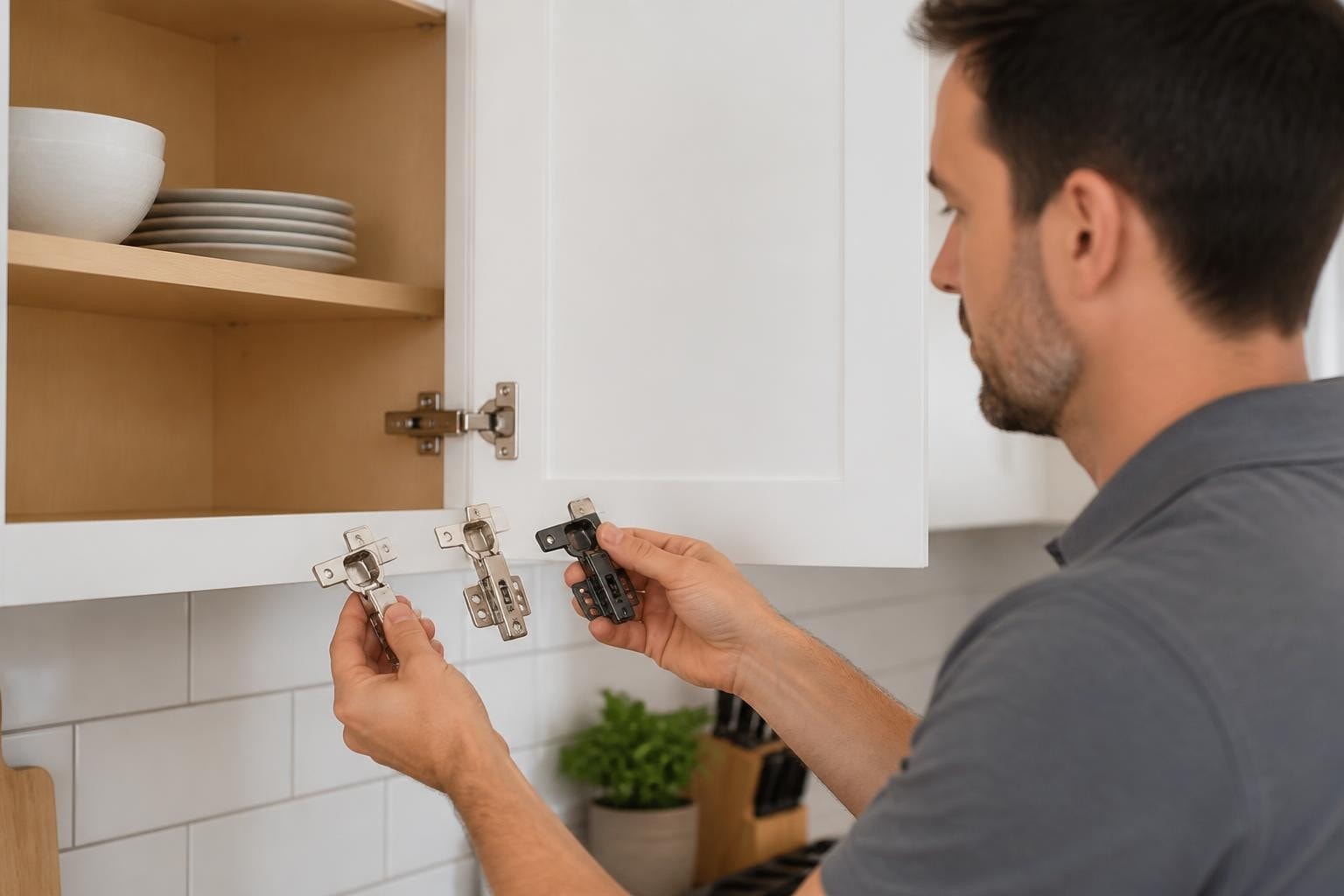
Kitchen cabinets open and close hundreds of times each month, and the components responsible for this seemingly simple movement deserve serious consideration. Kitchen hardware hinges represent one of the most critical functional elements in any kitchen, affecting everything from door alignment and longevity to the overall user experience. Whether you're planning a complete kitchen renovation, upgrading existing cabinetry, or working on a new build, understanding the nuances of hinge selection, installation, and maintenance ensures optimal performance for years to come.
Understanding Kitchen Hardware Hinge Categories
The cabinet hardware industry has evolved significantly over the past two decades, with European designs revolutionizing how we approach kitchen storage solutions. Modern kitchen hardware hinges fall into several distinct categories, each designed for specific cabinet construction methods and aesthetic preferences.
Concealed European Hinges
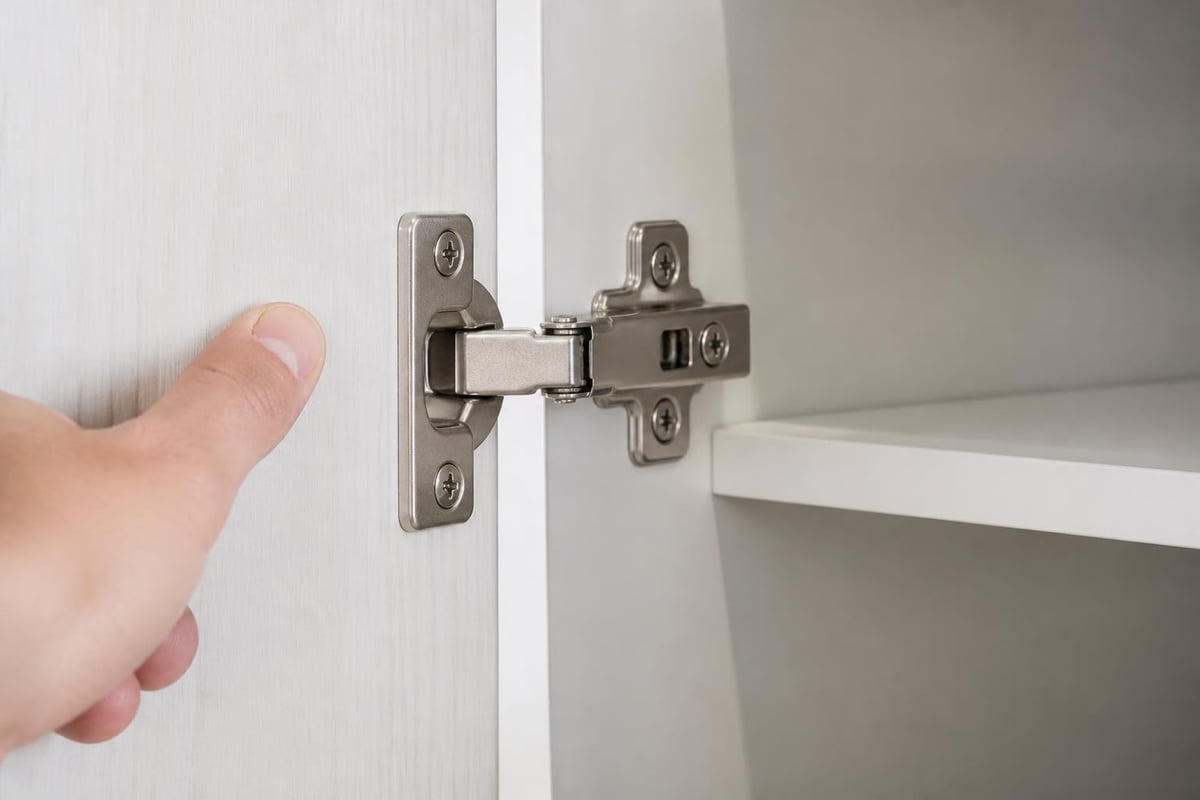
Concealed hinges dominate the contemporary kitchen landscape, offering clean lines and adjustable functionality that traditional hinges cannot match. These sophisticated mechanisms mount inside the cabinet box, remaining completely invisible when doors are closed. The European concealed hinge system provides three-dimensional adjustment capabilities, allowing installers to fine-tune door position even after installation.
Key advantages of concealed hinges include:
- Complete invisibility from the exterior
- Three-way adjustment (in/out, up/down, left/right)
- Consistent appearance across all cabinet doors
- Compatibility with frameless cabinet construction
- Easy replacement without refinishing
The installation process requires precise drilling, typically creating a 35mm cup hole in the door and mounting a separate plate to the cabinet interior. This complexity is offset by the superior adjustability these hinges provide.
Face Frame Hinges for Traditional Construction
Traditional face frame cabinets, still prevalent in many homes across the Western Cape, require different hinge approaches. Face frame hinges attach to the solid wood frame surrounding the cabinet opening, providing a mounting surface distinct from frameless construction.
Several face frame hinge varieties serve different applications. Partial wrap hinges cover only a portion of the frame, while full wrap hinges encompass the entire frame edge for maximum strength. Demountable hinges allow door removal without tools, facilitating painting or refinishing projects.
| Hinge Type | Visibility | Adjustment | Best Application |
|---|---|---|---|
| Partial Wrap | Partially visible | Limited | Standard overlay doors |
| Full Wrap | Visible | Minimal | Heavy doors, antique styles |
| Demountable | Partially visible | Moderate | Doors requiring removal |
| Semi-Concealed | Knuckle visible | Limited | Traditional aesthetics |
These traditional options remain relevant for renovation projects, heritage restorations, and homeowners who prefer classic styling over contemporary minimalism.
Overlay Types and Door Positioning
Understanding overlay relationships proves essential when selecting kitchen hardware hinges, as this determines how doors relate to cabinet boxes and adjacent doors. The overlay type fundamentally affects both hinge selection and overall kitchen appearance.
Full Overlay Configuration
Full overlay doors cover the entire cabinet box front, leaving only minimal gaps between adjacent doors. This configuration maximizes door size and creates a seamless appearance across cabinet runs. Full overlay hinges require specific arm lengths and mounting positions to accommodate the extended door projection.
Modern European kitchens almost universally employ full overlay construction, with doors typically extending 19mm to 22mm beyond the cabinet box on each side. This approach eliminates visible frame elements and creates the clean, contemporary aesthetic popular in 2026.
Half Overlay and Inset Applications
Half overlay doors cover approximately half the cabinet frame width, commonly used when two doors share a common partition. This traditional approach requires careful hinge selection to ensure proper door spacing and alignment.
Inset doors sit flush within the cabinet frame, demanding the highest precision during installation. Identifying the correct overlay type proves crucial when replacing existing hinges or upgrading cabinet hardware.
Measurements needed for proper overlay identification:
- Distance from door edge to cabinet box edge
- Gap between adjacent doors
- Door thickness relative to frame
- Opening clearance requirements
Soft-Close Technology and Motion Control
The evolution of kitchen hardware hinges has brought motion control technology that dramatically improves user experience. Soft-close mechanisms have transitioned from luxury features to expected standards in quality cabinetry throughout the Helderberg region and beyond.
Integrated Versus Add-On Systems
Soft-close functionality comes in two primary formats. Integrated systems build the dampening mechanism directly into the hinge body, creating a streamlined solution that requires no additional components. Add-on soft-close adapters attach to standard hinges, retrofitting motion control to existing installations.
Integrated soft-close hinges typically cost 30% to 50% more than standard mechanisms, but provide superior reliability and longevity. The dampening cartridge activates in the final 20 to 30 degrees of door closure, gently pulling the door shut while preventing slamming.
For homeowners and installers working with JM Cabinet Solutions – Cabinet Fittings & Hardware, access to quality soft-close mechanisms from trusted international brands ensures installations that perform reliably for decades. Selecting proven hardware from established suppliers eliminates the frustration of premature failure common with budget alternatives.

Performance Specifications
Modern soft-close hinges accommodate doors weighing up to 12kg, with heavy-duty variants handling 20kg or more. The dampening force adjusts based on door weight and closing speed, providing consistent performance across varying conditions.
Temperature stability represents another critical consideration, particularly in kitchens experiencing significant temperature fluctuations. Quality soft-close mechanisms maintain performance from -10°C to 50°C, ensuring reliable operation year-round.
Installation Considerations and Technical Requirements
Proper installation determines whether kitchen hardware hinges perform optimally or create ongoing frustration. The technical requirements vary significantly between hinge types, demanding appropriate tools and techniques for professional results.
Drilling and Mounting Precision
European concealed hinges require precise 35mm cup holes drilled to exact depths. Standard specifications call for 12mm to 13mm depth, positioned 22mm to 23mm from the door edge. Deviation beyond 0.5mm can compromise adjustment range and door alignment.
Professional installers rely on dedicated boring jigs to ensure consistency across multiple doors. DIY homeowners can achieve acceptable results with quality Forstner bits and careful measurement, though practice runs on scrap material prove invaluable.
Essential installation tools include:
- 35mm Forstner bit with depth stop
- Hinge boring jig (recommended)
- Mounting plate installation jig
- 3mm drill bit for pilot holes
- Phillips head screwdriver or drill bit
Face frame hinges demand different preparation, typically requiring only pilot holes for mounting screws. However, proper frame positioning and door gap calculations become more critical, as adjustment capabilities remain limited compared to European systems.
Opening Angles and Accessibility
Different hinge types provide varying opening angles, affecting cabinet accessibility and functionality. Standard hinges typically open 100 to 110 degrees, sufficient for most applications but potentially limiting in corner cabinets or tight spaces.
Wide-Angle Hinge Applications
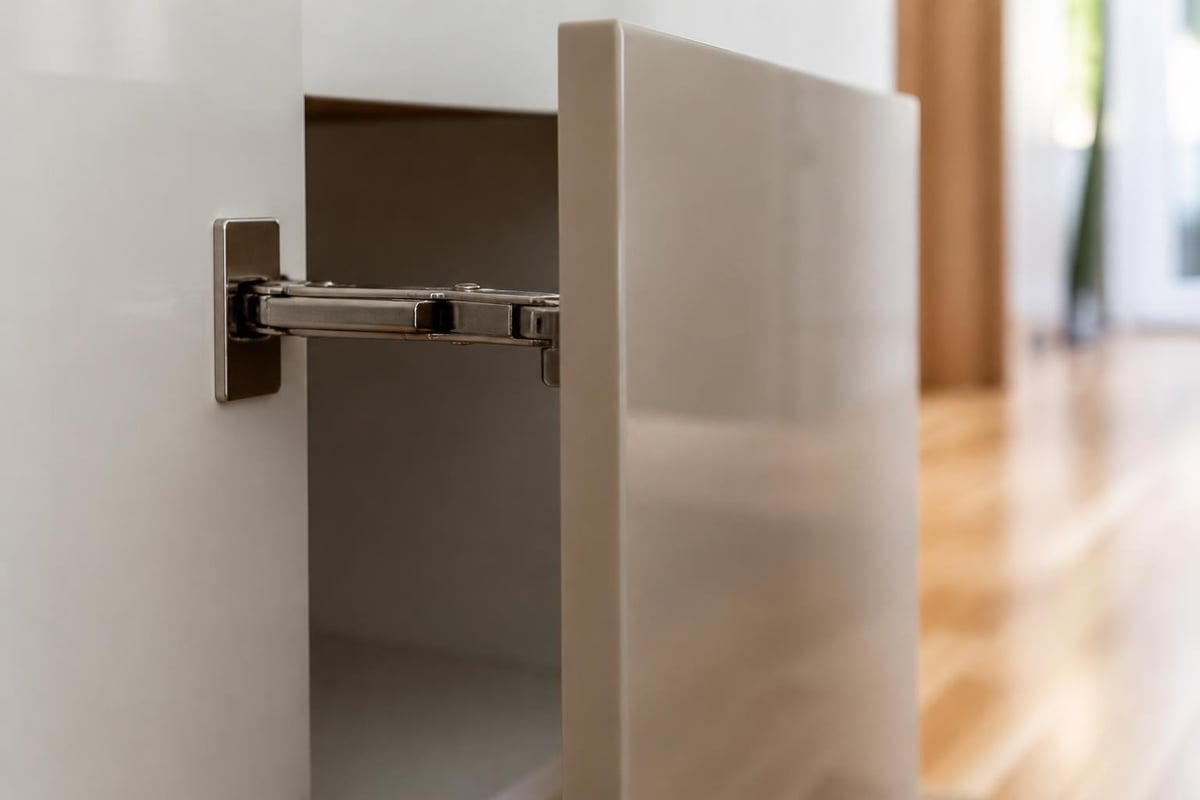
Specialized wide-angle hinges open 165 degrees or more, allowing doors to fold completely back against adjacent cabinet sides. This proves particularly valuable in corner cabinet applications, where standard hinges create access restrictions.
Bi-fold and tri-fold door systems employ multiple hinges per door, creating compact folding mechanisms for large openings. These specialized applications require careful planning and specific hinge selections to ensure proper operation.
| Opening Angle | Application | Accessibility | Common Use Cases |
|---|---|---|---|
| 95-100° | Standard | Moderate | Most cabinet doors |
| 110-120° | Enhanced | Good | Standard corners |
| 165-170° | Wide angle | Excellent | Blind corners, tight spaces |
| 180° | Full swing | Maximum | Specialty applications |
Corner solutions often combine wide-angle hinges with pull-out shelving systems, maximizing the utility of traditionally difficult spaces.
Material Quality and Longevity Factors
The materials and manufacturing quality of kitchen hardware hinges directly impact service life and performance reliability. Professional installers and discerning homeowners recognize that initial cost represents only a fraction of total ownership expense when factoring in replacement labor and downtime.
Steel Grades and Surface Treatments
Quality hinges utilize cold-rolled steel or stainless steel construction, with surface treatments providing corrosion resistance. Nickel plating offers excellent protection for standard environments, while stainless steel variants suit coastal areas or high-humidity applications.
The gauge thickness affects load capacity and durability. Premium hinges employ heavier gauge steel in critical stress points, extending operational life under regular use. Budget alternatives often sacrifice material thickness, leading to premature wear and adjustment loss.
Finish options and their characteristics:
- Nickel-plated steel: Standard protection, cost-effective
- Zinc die-cast with coating: Mid-range durability
- Stainless steel: Superior corrosion resistance
- Powder-coated finishes: Color matching capabilities
Testing standards vary by manufacturer and region, with European DIN standards and North American ANSI/BHMA certifications providing performance benchmarks. Hinges meeting these standards undergo cycle testing, load testing, and corrosion resistance evaluation.
Troubleshooting Common Hinge Issues
Even quality kitchen hardware hinges eventually require adjustment or maintenance. Understanding common issues and their solutions empowers homeowners and installers to address problems efficiently without unnecessary hardware replacement.
Door Alignment Problems
Misaligned doors represent the most frequent hinge-related complaint. Common kitchen cabinet issues often stem from hinge adjustment needs rather than defective components. European concealed hinges provide three adjustment screws controlling different door positions.
The depth adjustment screw moves doors toward or away from the cabinet box, addressing doors that protrude excessively or sit too far recessed. The height adjustment raises or lowers door position, correcting uneven gaps at top or bottom. The side-to-side adjustment shifts doors laterally, aligning them with adjacent doors or cabinet frames.
- Identify which adjustment plane requires correction
- Loosen the relevant adjustment screw slightly
- Reposition the door to desired alignment
- Tighten the adjustment screw firmly
- Verify door operation and gap consistency
Sagging and Load-Related Issues
Heavy doors may sag over time, particularly when inadequate hinge quantity supports the weight. Standard practice calls for two hinges on doors up to 1200mm height, three hinges for doors between 1200mm and 1800mm, and four hinges beyond 1800mm.
Upgrading to heavy-duty hinge variants addresses persistent sagging without adding additional hinge locations. These reinforced mechanisms provide 50% to 100% greater load capacity through thicker materials and enhanced mounting plates.
Specialized Hinge Applications
Beyond standard door mounting, kitchen hardware hinges serve specialized applications requiring unique mechanical properties. Understanding these variants expands design possibilities and solves challenging installation scenarios.
Lift-Up and Fold-Down Mechanisms
Upper cabinet doors using lift-up mechanisms employ specialized hinges with integrated gas struts or spring assistance. These sophisticated components hold doors open at predetermined angles, facilitating access while preventing sudden closure.
Fold-down applications, common in desk areas and appliance garages, utilize similar technology with different geometry. The hinge mechanisms must counterbalance door weight throughout the travel arc, maintaining controlled motion without binding or free-falling.
Glass Door Considerations
Glass cabinet doors demand hinges specifically designed for their unique properties. Glass-compatible hinges feature larger mounting plates distributing stress across wider areas, preventing point-loading that could crack or shatter glass panels.
The mounting approach varies between framed glass doors and frameless glass applications. Frameless glass typically requires drilling through the glass panel, with specialized rubber bushings protecting against stress concentration.
Selection Criteria for Professional Results
Choosing appropriate kitchen hardware hinges involves balancing numerous factors including budget, aesthetics, functionality, and installation complexity. A systematic selection process ensures optimal results whether tackling DIY projects or professional installations throughout Somerset West, Stellenbosch, and surrounding areas.
Project Assessment Framework
Begin by documenting existing cabinet construction or new build specifications. Understanding cabinet frame types and door positioning establishes the foundation for appropriate hinge selection. Face frame versus frameless construction fundamentally determines which hinge categories remain viable.
Door weight calculation proves essential for proper hinge specification. Multiply door height by width by thickness, then apply wood density factors to estimate weight. Solid hardwood doors weigh significantly more than MDF or particleboard alternatives, requiring appropriately rated hinges.
Critical selection factors:
- Cabinet construction method (face frame or frameless)
- Door overlay type (full, half, or inset)
- Individual door weight and dimensions
- Desired opening angle and accessibility
- Soft-close requirement or preference
- Budget allocation per hinge
Quality Versus Budget Considerations
The kitchen hardware hinges market spans a vast price spectrum, with individual hinges ranging from under R20 to over R250 for premium variants. This price variation reflects genuine differences in materials, manufacturing precision, and expected service life.
Budget hinges may function acceptably initially but often develop play in mounting points, lose adjustment capability, and fail prematurely. A complete kitchen with 30 doors requires 60 to 90 hinges, making the cost difference between budget and quality options significant but manageable when considered against total project costs and expected longevity.
Mid-range hinges from established manufacturers typically offer the best value proposition for homeowners and professional installers. These products incorporate quality materials and manufacturing while avoiding the premium pricing of top-tier brands. For detailed guidance on selecting appropriate hardware for specific applications, resources from experienced cabinet hardware suppliers prove invaluable.
Maintenance and Long-Term Care
Proper maintenance extends kitchen hardware hinges service life and maintains smooth operation. Unlike many cabinet components requiring minimal attention, hinges benefit from periodic inspection and basic maintenance procedures.
Cleaning and Lubrication
Kitchen environments expose hinges to cooking oils, humidity, and temperature fluctuations that can affect performance. Semi-annual cleaning removes accumulated residue that may impede movement or accelerate wear.
Remove loose debris with a soft brush, then wipe hinge surfaces with a damp cloth. Avoid harsh chemicals or abrasive cleaners that might damage protective finishes. For concealed European hinges, ensure cleaning solution doesn't enter the soft-close dampening mechanism, as contamination can compromise performance.
Light lubrication of pivot points maintains smooth operation, though modern hinges generally require minimal intervention. Apply silicone-based lubricant sparingly to moving parts, avoiding excess that attracts dust and creates residue buildup.
Adjustment Maintenance
Hinges naturally lose adjustment precision over years of operation, particularly on frequently accessed doors. Annual adjustment verification ensures doors maintain proper alignment and gap consistency.
Check each door for even gaps around the perimeter, smooth opening and closing action, and proper soft-close engagement if equipped. Address minor misalignments promptly, as small problems often indicate developing issues that worsen without intervention.
Document adjustment positions when achieving perfect alignment, creating a reference for future corrections. This proves particularly valuable in large installations where multiple doors require similar settings.
Brand Considerations and Supplier Relationships
The kitchen hardware hinges market features numerous manufacturers ranging from internationally recognized brands to generic imports. Understanding brand positioning and establishing relationships with knowledgeable suppliers significantly impacts project outcomes.
Trusted International Brands
Established European manufacturers like Blum, Hettich, Grass, and Salice have earned reputations for quality and innovation spanning decades. These companies invest heavily in research and development, introducing technological advances that eventually filter through to the broader market.
Premium brands provide comprehensive technical documentation, installation templates, and customer support resources that simplify specification and installation processes. Their extensive product ranges address virtually any application requirement, from standard residential cabinets to specialized commercial installations.
Mid-tier manufacturers offer comparable functionality at reduced costs, making quality hardware accessible for budget-conscious projects without compromising fundamental performance. These brands typically source manufacturing in modern facilities with quality control processes ensuring consistency and reliability.
Working with Specialist Suppliers
Developing relationships with specialist cabinet hardware suppliers provides advantages beyond simple product availability. Experienced suppliers offer application advice, troubleshooting assistance, and access to technical resources that general hardware retailers cannot match.
Specialist suppliers maintain comprehensive inventory across hinge types, opening angles, and finish options, ensuring project needs can be met without compromising on specifications. They understand the nuances between similar-appearing products and can guide selection based on specific installation requirements and budget constraints.
Selecting and installing appropriate kitchen hardware hinges requires understanding numerous technical factors, from overlay types and opening angles to material quality and adjustment capabilities. Whether you're a DIY homeowner planning a kitchen refresh, a cabinet maker specifying hardware for a new build, or an installer maintaining existing cabinetry, informed decisions about hinge selection ensure optimal performance and longevity. JM Cabinet Solutions serves the Helderberg and Western Cape with quality cabinet fittings from trusted international brands, providing the expert guidance and product selection needed to achieve professional results in every kitchen project.


Comments
Post a Comment